Tech 3
Purpose
The Technical Level 3 (Tech 3)
course is the culmination of a series of three courses designed to establish
technical diving excellence and facilitate deep, mixed gas diving. Emphasis is placed on aggressive diving
profiles including advanced decompression theory, advanced gas
mixture/management, control over extreme exposures to Oxygen and proficiency in
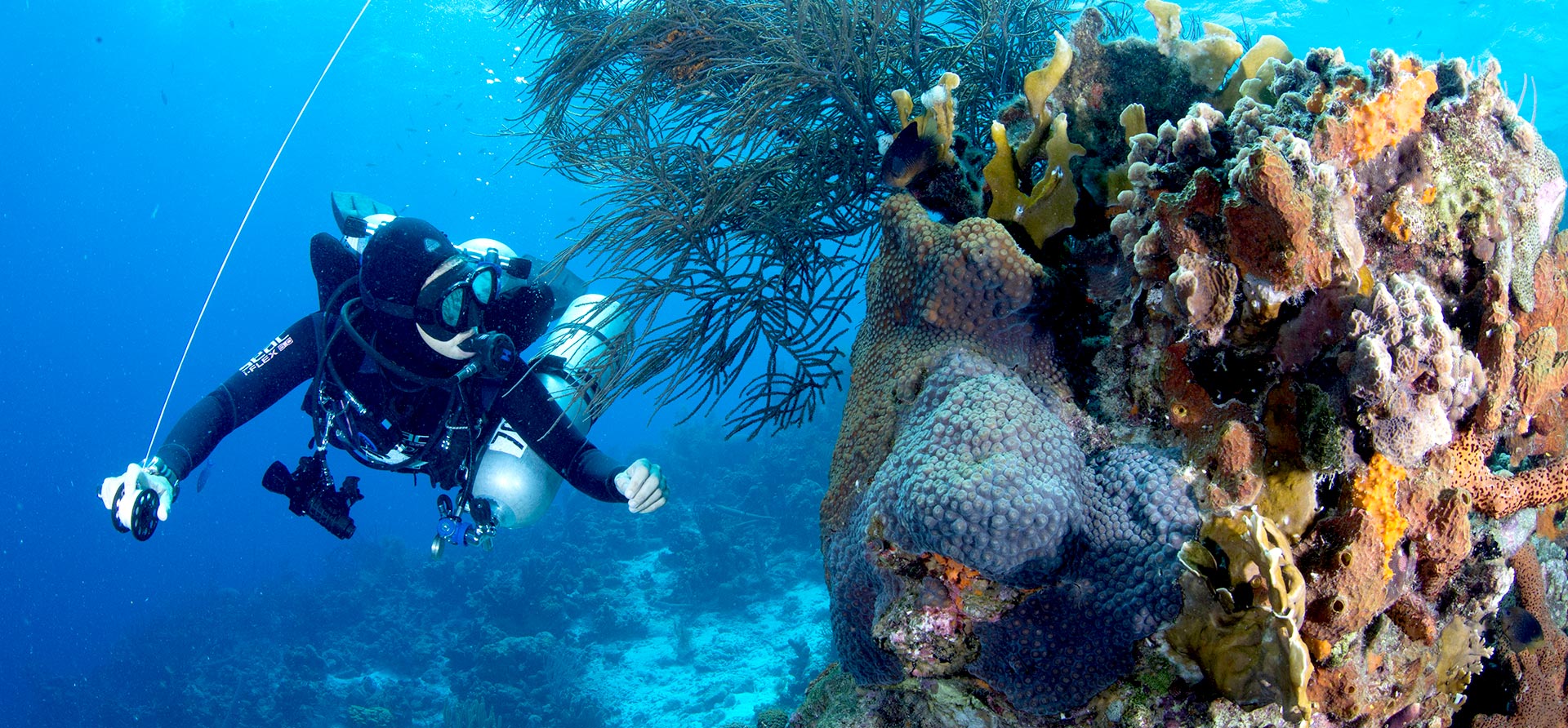
the use of a DPV for propulsion at depth.
This course is heavily experience-based and deals mostly with the
practical implications of deep diving; divers are expected to be capable
technical divers.
Prerequisites
-
Must meet GUE General Course Prerequisites as outlined in
Section 1.6
-
Must be a minimum of 21 years of age
- Must beGUE Tech 2
qualified and GUE Cave Level 1 trained
- Must have a minimum of 300 logged dives with at least
200 dives in double cylinders and at least 50 dives beyond Tech 2
training
- Must
be able to swim a distance of at least 60 feet/18 meters on a breath hold
- Must
be able to swim at least 400 yards/365 meters in less than 12 minutes
without stopping. This test should be conducted in a swimsuit and, where
necessary, appropriate thermal protection.
Duration
The GUE Tech 3 class is normally
conducted over a 7-day period and involves a minimum of forty (40) hours of
instruction. Training consists of at
least ten (10) dives of which six (6) are critical skills/drills and four (4)
are experience dives as defined by GUE standards.
Course Limits
-
General Training Limits as outlined in Section 1.4
-
Student to instructor ratio is not to exceed 3:1 during
in-water training or land drills
Course Content
The GUE Tech 3 course is normally
conducted over a 7-day period, and cumulatively involves a minimum of forty
(40) hours of class-oriented instruction (lecture and in-water) designed to
instill divers with an advanced understanding of mixed gas diving. Special emphasis here will be placed on
extended exposures and their associated considerations (dive planning, gas
management, DCS, Oxygen toxicity, DPV propulsion, and thermal concerns).
Course requirements include a
minimum of six (6) critical skill dives (3 days) with training in scooter
diving, multiple stage/deco bottles, navigation, advanced gas management and
advanced decompression strategy, and four (4) Trimix experience dives (4 days)
with practical implementation of critical skills during deeper/longer diving.
Required Training Materials
-
Doing it Right: The Fundamentals of Better Diving. Jarrod Jablonski, GUE, 2001, High Springs,
Florida.
-
Getting Clear on the Basics: The Fundamentals of Technical
Diving. Jarrod Jablonski, GUE,
2001, High Springs, Florida.
- Beyond
the Daylight Zone: The Fundamentals of Cave Diving. Jarrod Jablonski, Panos Alexakos and
Todd Kincaid, GUE, 2001, High Springs, Florida.
- The
Physiology and Medicine of Diving. Peter Bennett and David Elliott, W.
B. Saunders Company Ltd, London.
Academic Topics
-
GUE organization
-
Limits of training and course completion requirements
-
Conservation
-
Logistical planning, project support, and operational planning
-
Advanced diving techniques including scooter diving, use of
multiple stage/deco bottles, navigation, advanced gas management, and advanced
decompression strategy
Land Drills & Topics
- Spool,
reel, and guideline use
- Dive
team order and protocols
- Scootering
protocols
- Touch
contact
- Advanced
navigation skills
Required Dive Skills & Drills
-
All skills and drills as outlined in General Diving Skills,
Section 1.5.
-
Assess and review diving limitations.
-
Skillfully demonstrate gas failure procedures; including valve
manipulation, gas-sharing, and regulator switching (as appropriate).
-
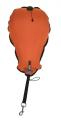
Demonstrate the ability to deploy a
lift bag/surface marker buoy in less than two minutes while hovering
stationary. Participants should not
vary in depth more than 5 feet/1.5 meters.
-
Be able to skillfully demonstrate at
least two propulsion techniques that would be appropriate in delicate and/or
silty environments.
-
Demonstrate good touch contact skills for limited and
simulated zero visibility situations.
-
Demonstrate excellent reel and guideline use.
-
Demonstrate proficiency in gas-sharing while managing multiple
stages.
-
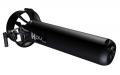
Demonstrate safe and efficient operation of a DPV.
- Demonstrate
proficiency in gas-sharing while piloting a DPV.
- Demonstrate
the ability to run/retrieve a guideline while scootering.
- Demonstrate
the ability to tow a diver whose diver propulsion vehicle has failed.
- Demonstrate
proficiency in managing scooter times (power management protocols).
- Demonstrate
the effective deployment of a reserve light in less than 30 seconds.
- Demonstrate
excellent buoyancy control skills.
- Demonstrate a clean and efficient removal of multiple
stage and/or decompression bottles while hovering horizontal.
- Demonstrate
facility with advanced decompression procedures by: 1) demonstrating the
ability to explain trends in decompression tables, and 2) by explaining a
strategy for managing decompression in the event of a lost decompression
gas.
- Demonstrate
the knowledge to safely carry out all decompression obligations assuming
the loss of all back gas.
- Demonstrate
capacity with navigation, including compass operation and natural
navigation techniques.
Equipment Requirements
Each student should have, and be familiar with, all of the
following required equipment.
-
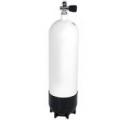
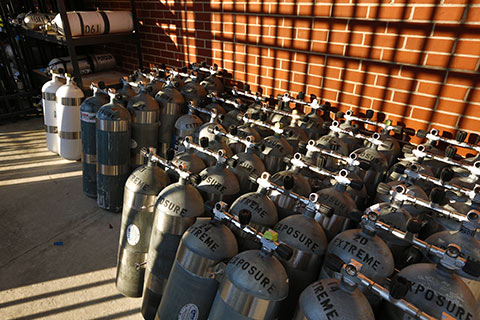
Tanks/Cylinders: Students are required to use dual
tanks/cylinders connected with a dual outlet isolator manifold, which allows
for the use of two first-stages. All dives must start with a minimum of 80
cubic feet/2250 liters of gas. Divers
must also maintain the use of at least four appropriately marked stage
bottles. Stage
bottles should include: one Oxygen cylinder, one cylinder for use at 70 feet/21
meters, one cylinder for use at 120 feet/36 meters, and one cylinder for use at
190 feet/57 meters.
-
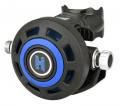
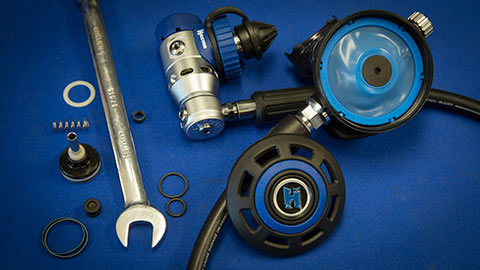
Regulators: Two first-stages, each supplying a single
second-stage. One of the second-stages must be on a 7-foot/2-meter hose. One of
the first-stages must supply a pressure gauge and provide inflation for a dry
suit where applicable. Four first-stage regulators, one
for each stage/decompression cylinder; each one is to supply a single
second-stage and a single pressure gauge.
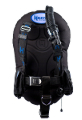
- Backplate
System: A rigid and flat platform,
of metal construction with minimal padding, held to a diver by one
continuous piece of nylon webbing. This webbing should be adjustable
through the plate and should use a buckle to secure the system at the
waist. A crotch strap attached to the lower end of this platform and
looped through the waistband would prevent the system from riding up a
diver's back. A knife should be secured to the waist on the left webbing
tab. This webbing should support five D-rings; the first should be placed
at the left hip, the second should be placed in line with a diver's right
collarbone, the third should be placed in line with the diver's left
collarbone, the fourth and fifth should be affixed to the crotch strap to
use while scootering or towing/stowing gear. The harness below the diver's arms should have small
restrictive bands to allow for the placement of reserve light powered by
three in-line c-cell batteries (where necessary). The system should retain
a minimalist approach with no unnecessary components.
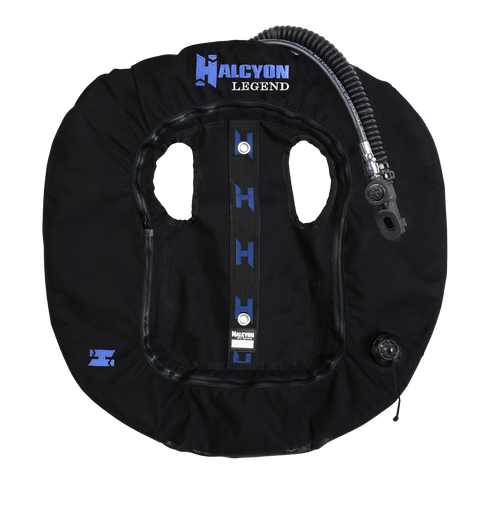
- Buoyancy Compensation Device: A
diver's buoyancy compensation device should be back-mounted and minimalist
in nature. It should come free of extraneous strings, tabs, or other
material. There should be no restrictive bands or "bungee" of any sort
affixed to the buoyancy cell.
In addition, diver lift should not
exceed 80lbs. Wing size and shape should be appropriate to the cylinder
size(s) employed for training.
- Approved DPV
- At least one depth-measuring
device
- One timekeeping device
- Survey compass and slate
- Decompression tables
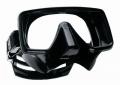
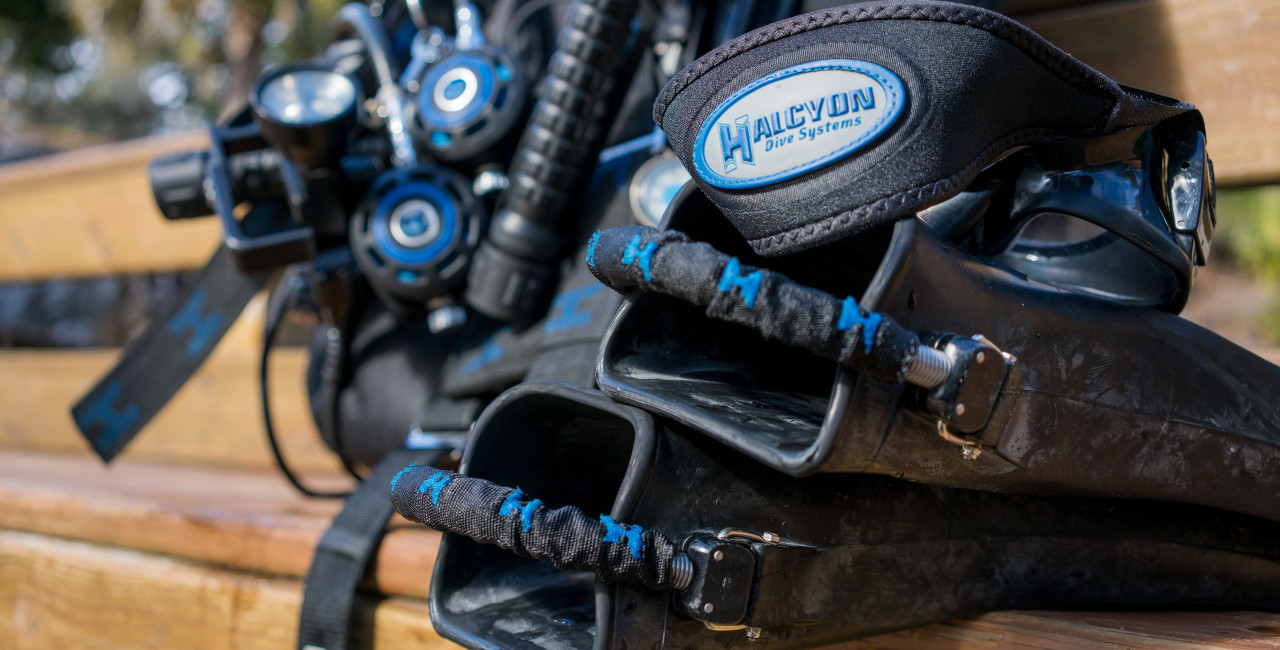
- Mask and fins: Mask should be low volume; fins should be
rigid, non-split
- At least one cutting device
- Wet Notes
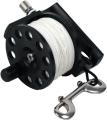
- One reel/spool with 100 feet/30 meters of line per diver
- One primary reel per team, with a minimum of 300 feet/90
meters of line
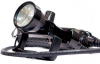
- One primary light: A primary light should be minimalist in design; its
power source should consist of a rechargeable battery pack residing in a
canister powering an external light head via a light cord. Primary lights should produce the
equivalent output of 50 watt halogen/10 watt HID lighting or greater.
- Two reserve lights: Reserve
lights should be non-rechargeable in-line three c-cell battery lights with
a minimum of protrusions and a single attachment at its rear. The light
should be activated by twisting the front bezel towards the body,
deactivated by turning it away from the body.
- Exposure suit appropriate for the duration of exposure
-
At least one surface marker buoy per diver
Note: Prior to the commencement of class, students should
consult with a GUE representative to verify equipment requirements. Whether or
not a piece of equipment fulfills GUE's equipment requirement remains at the
discretion of GUE and its instructor representatives. Participants are responsible for providing all equipment or for
making provisions to secure all necessary equipment before the start of the
course. In general, it is better for the student to learn while using his or
her own equipment. However, students
should exercise caution before purchasing new equipment to avoid acquiring substandard
equipment. Please contact a GUE representative prior to making any purchases.
Information about recommended equipment can be obtained from the equipment
considerations section of GUE's web site.